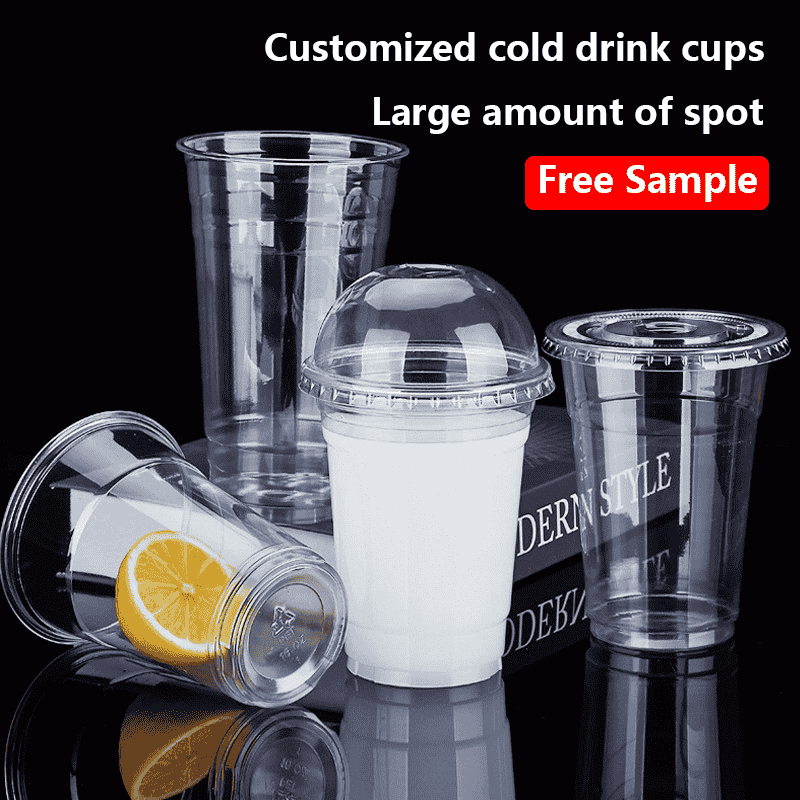
Cup Lid Compatibility: How to Choose the Right Lid for Plastic Cups
News 2026-11-26
To choose the right lid for a plastic cup, start with the exact cup model, confirm the supplier-approved lid model, and test the pair under your intended serving conditions. Cup capacity and nominal rim diameter are useful starting points, but neither is a complete compatibility specification. A lid that appears to snap on is not automatically suitable for carrying, delivery, or a different beverage temperature.
For purchasing teams, the most useful question is not simply, “Do you sell a lid in this size?” It is, “Which lid has been checked with this cup, for this drink, and under these handling conditions?” This guide provides a practical way to turn that question into a product shortlist, a sample review, and a repeatable ordering record. The checks below are proposed buyer procedures, not a substitute for a supplier's specifications, a formal inspection standard, or food-contact compliance assessment.
1. Define the Cup-and-Lid Pair Before Comparing Prices
Treat the cup and lid as one purchasing combination, even if they appear as separate items on a quotation. Begin by recording the cup's product code, material, stated capacity, rim specification, and intended beverage use. Then ask the supplier to name the compatible lid code and explain whether the recommendation applies to that exact cup or to a documented family of cups. Avoid approving a combination described only as “a standard cold cup with a matching lid.”
An exact product code gives the conversation a verifiable reference. For example, Jingyu's public 95-12oz PET Cup product page lists the product number JY95-400-12oz and identifies the material as PET. That listing helps identify the cup being discussed. It does not, by itself, establish which separate lid model is compatible. Ask for that pairing rather than inferring it from the product name.
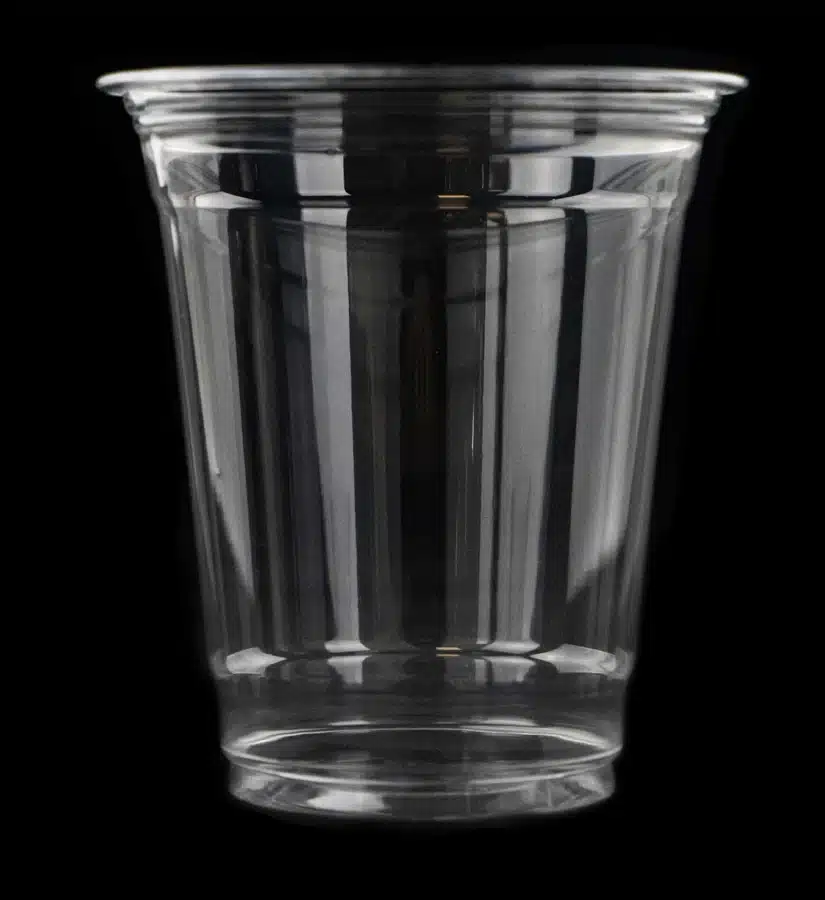
Also distinguish serving capacity from lid fit. A beverage portion and a rim connection answer different purchasing questions. When requesting several cup capacities, ask whether the proposed models genuinely share an approved lid, and request the supporting compatibility list. A common lid may be a useful purchasing objective, but it should not be treated as a confirmed feature before the supplier checks the specific products.
For an existing packaging program, keep the current cup and lid codes in the enquiry even if you are changing suppliers. Where samples are available, label each part separately. This makes it easier to distinguish a replacement for one component from a completely new packaging combination.
2. Read Rim Measurements as a Screening Tool, Not a Fit Guarantee
A diameter label helps narrow a search, but cup lid compatibility also depends on the interacting shapes of the two components. The cup's rim profile and the lid's locking area matter alongside the stated measurement. OneStop's published cup-and-lid compatibility testing overview describes checking rim shape, dimensional variation, and full-rim engagement rather than relying on diameter alone. This is useful supplier guidance, not a universal technical standard.
When comparing drawings, ask what each dimension measures. A cup's top measurement and a lid's overall outside measurement should not be assumed to describe the same contact surface. Ask the supplier to identify the relevant rim and lid dimensions, the measurement method, and any tolerances used to approve the combination. Do not invent a tolerance from a ruler reading or from a similar-looking product.
If you already hold stock, provide the supplier with the cup code, packaging label, and clear photographs of the rim and lid underside. A drawing or physical sample is more useful than a photograph alone when dimensional details are uncertain. Any measurements you take should be labeled as buyer observations rather than a replacement for the manufacturer's specification.
Compatibility statements are often product-family specific. For example, Vegware's 96-Series PLA sipping lid page explicitly identifies its own 96-Series cold cups as the matching family. That statement supports a named system; it is not evidence that the lid fits another manufacturer's cup with a similar diameter. Apply the same requirement for a clearly identified match when evaluating a new Jingyu cup-and-lid combination.
3. Choose the Lid Opening Around the Drink and Service Method
Once the supplier has identified compatible models, compare how each lid works with the actual drink. Jingyu's PET lid range includes flat, dome, and straight-drink options. These descriptions help organize the shortlist, but they do not establish that every design fits every listed cup. Keep the fit decision separate from the decision about how a customer will drink, insert a straw, or carry the order.
Use the following table as a discussion guide, not a recommendation for an untested product. The supplier should confirm the exact design, opening, material, and intended use before a sample is approved.
| Your serving requirement | Lid feature to evaluate | Question to resolve with the supplier |
|---|---|---|
| A drink served with a straw | Flat or dome lid with a suitable opening | Does the opening suit the actual straw, and can staff insert it without disturbing the fitted lid? |
| A drink with toppings above the rim | Dome clearance and opening position | Is there enough space for the intended topping and filling method? |
| Direct drinking without a straw | A suitable straight-drink or sipping opening | Is the opening appropriate for the beverage, and is any closure operation clear to the customer? |
| Takeaway or delivery | Retention at the rim and behavior of openings during handling | What transport conditions and package orientation is this exact combination intended to accommodate? |
For a visual reference, inspect Jingyu's 95 Caliber dome lid listing and ask the supplier to identify the opening specification and the approved cup models. The product name alone is not a compatibility list.
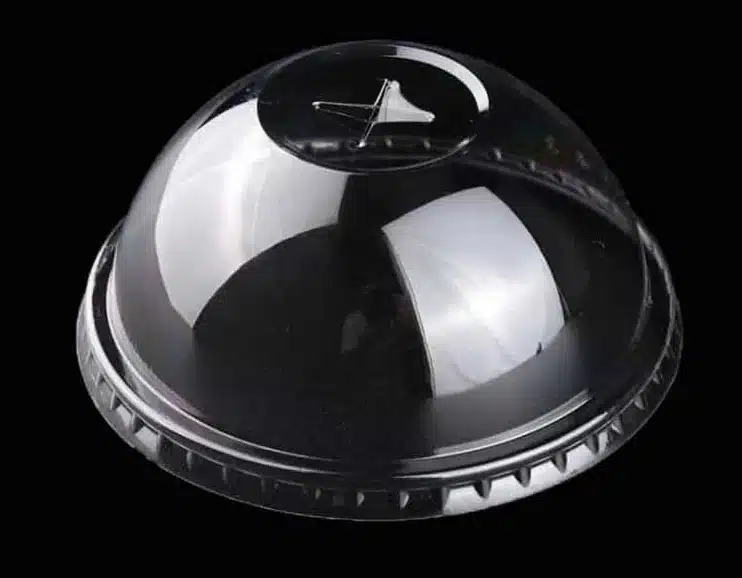
Include operational details in the sample brief. A topping, straw, carrier, or filling method is part of the use case, not an afterthought. Ask employees to try the complete sequence: fill the cup, fit the lid, add any permitted accessory, and place the drink in its carrier. Record where an opening or clearance needs to change before asking for another quotation.
Avoid using “leak-proof” as a blanket purchasing requirement without defining the test and the lid design. A straw slot or drinking opening is different from the rim connection. Your approval record should say where liquid was observed and under what conditions, rather than treating every drop as proof of the same failure.
4. Confirm the Intended Temperature and Food-Contact Use
Do not use the material name alone as permission to change the beverage temperature. Ask for the intended operating conditions of both the cup and the lid, including the beverage type, filling temperature, and expected contact time. If the supplier provides separate instructions for each component, ask them to confirm the proposed pair as a whole. A cup recommendation should not be silently extended to a different lid or a different service condition.
A product description can be narrow for a reason. The Vegware lid referenced above is expressly described for cold drinks. That is evidence about that named product, not a temperature limit that can be transferred to every lid made from the same material. Similarly, the PET label on Jingyu's example cup should not be converted into a general promise about hot filling, reheating, freezing, or other uses not established for that exact product.
For purchasing records, request the documents applicable to the actual cup and lid materials and to the market where you will sell or use them. Ask the supplier to identify the covered product, intended use, and relevant limitations. A general company certificate or a broad food-grade statement should not replace a product-specific explanation when that is needed for your procurement review.
If the intended application changes, reopen the approval rather than assuming the previous decision still applies. A beverage recipe, serving temperature, or storage condition may introduce a new question for the supplier. Keep unapproved combinations out of live service while those questions are unresolved, and obtain qualified advice where food-contact compliance needs specialist interpretation.
5. Run a Sample Review That Reflects Real Service
A sample review should answer a practical question: can your team use this proposed cup-and-lid pair consistently for the planned drink? Agree the test conditions and acceptance criteria with the supplier before relying on the result. The sequence below is a suggested purchasing workflow. It does not claim to be a certified test method or establish a universal sample size, pressure, duration, or drop height.
Check identification and visible condition. Label the cup and lid codes, record the sample source, and note any visible damage or distortion before assembly. Keep visibly damaged items separate so that a handling problem is not confused with the intended fit of an undamaged pair.
Check closure around the whole rim. Ask more than one team member to fit the lid using the supplier's instructions. Look for raised sections or uneven engagement and record whether closure can be repeated without unusual effort. Do not stop the evaluation merely because one sample clicked into place once.
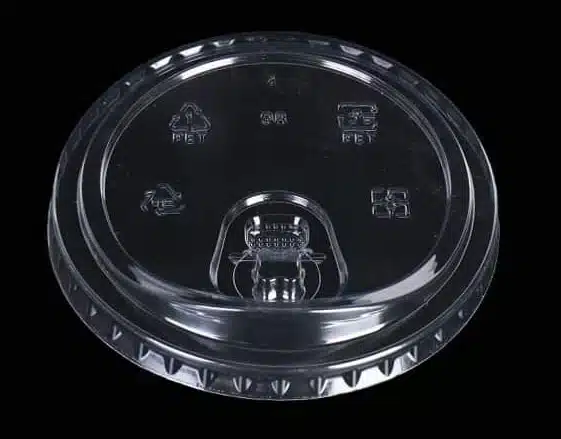
When reviewing a direct-drinking design, record the proposed item using its product reference, such as Jingyu's 95 Caliber straight drink lid. Ask the supplier to demonstrate its intended operation with the approved cup. The photograph below shows the lid itself, not a completed fit or leakage test.
Reproduce the intended serving sequence. Use a beverage or test medium appropriate to the approved conditions, with the planned fill level and accessories. Check the combination in the carrier and during a controlled version of normal handling. Distinguish moisture at the rim from liquid passing through a designed opening. Do not invert open drinking lids as an informal proof of spill-proof performance, and do not introduce hot-liquid handling or improvised pressure tests outside an approved safe procedure.
Review variation, not just one successful pair. Ask the supplier how samples represent the proposed order and how production consistency will be checked. Keep a written record of each observation, including the cup and lid identification, filling conditions, handling step, location of any problem, and corrective action requested. Agree a formal sampling or inspection plan separately if your order requires one.
Approve the written specification and the identified pair together. If either component is replaced during sampling, repeat the relevant checks and update the record. An approval should remain attached to the tested combination, not to a general category such as “clear cups and lids.”
6. Make the Quotation and Reorder Record Specific
Once the pair is approved, convert the sample decision into a purchasing record that another colleague can understand. Separate cup and lid line items are useful, but the quotation should also make their relationship explicit. Ask for the confirmed pairing in writing and retain the sample reference or approval record alongside the order. This reduces reliance on a conversation that may be forgotten before the next purchase.
Use the following information request when preparing a supplier enquiry. It is a checklist of questions, not a statement that any supplier has already agreed to these terms:
- Identify the exact cup code and the compatible lid code being quoted.
- Confirm the cup and lid materials, relevant dimensions, and intended use.
- Identify the lid style, opening, and any accessory requirements.
- Explain the sample approval process and what happens if either component changes.
- State the packing quantity for each item separately and identify how cartons will be labeled.
- Confirm the commercial terms applicable to this enquiry, including minimum order quantity, lead time, and any customization conditions.
- Explain how production substitutions or specification revisions will be communicated before shipment.
Keep separate records for facts that are easy to confuse. Pieces per carton are not automatically the minimum order quantity. A quoted production lead time is not automatically the delivery date. A sample that fits is not evidence that an unannounced substitute will fit. None of these details should be copied from a different product page without confirmation.
For repeat orders, use an approved-pair register with the cup code, lid code, specification revision, application, approval reference, and responsible reviewer. Ask the supplier to flag changes before shipment. If you are trying to reduce the number of lid types held in stock, work from a confirmed compatibility list rather than merging items because their names or photographs look similar.
7. Cup Lid Compatibility FAQs and Your Next Step
Can two plastic cups with the same capacity use different lids?
Do not select a lid by capacity alone. Capacity describes the drink portion, while the rim and lid connection determine fit. Ask for the cup model and its compatible lid model. If you want one lid across several cup capacities, request confirmation for every cup code rather than extending approval from a single sample.
Does the same stated diameter guarantee compatibility?
No. Treat it as an initial screening detail and confirm the exact pairing. The rim shape, lid engagement, and dimensional specification also need to be considered. A compatibility statement for one manufacturer's named product series is not an approval for another series or another supplier.
Is a lid that snaps on automatically suitable for delivery?
Not necessarily. Closure is one check; the planned drink, lid opening, carrier, and handling conditions still need evaluation. Record where any liquid escapes and avoid describing an open drinking lid as universally spill-proof. Use the supplier's intended conditions and an agreed sample review rather than an improvised stress test.
How should I begin if I already have a cup but no matching lid?
Start with the product code, the existing specification or packaging label, and photographs of the rim. Ask whether the supplier needs a physical sample or drawing. Keep the intended drink, serving conditions, and desired lid style in the same enquiry so that a recommendation can address both fit and use.
The next step is a defined enquiry, not a guess at a lid size. Use Jingyu's contact page to send your cup model or sample details, preferred lid style, beverage application, and expected order requirement. Request the proposed cup-and-lid codes and a sample-review plan before approving a bulk order. A specific, documented pairing gives your team a clearer basis for comparing options and placing the next purchase.